
Complete Guide to Recurve Bow Setup & Maintenance
There is a quiet, pure elegance to traditional archery that modern compound bows simply can’t replicate. Recurve bows are entirely mechanical yet beautifully simple. However, unlike their complex compound cousins, recurves rely entirely on the integrity of their wooden risers, delicate limbs, and highly tuned strings. For new archers and seasoned traditionalists alike, protecting these components during setup and maintenance is absolutely vital.
This guide takes you through the essential steps of setting up and maintaining your recurve bow, ensuring it remains accurate, safe, and beautiful for decades.
Step 1: Establishing the Perfect Workbench Setup
Before you even think about stringing your bow, you need a dedicated, safe workspace. The polished wooden riser of a recurve bow is notoriously sensitive to scratches and dents. More importantly, when you change strings or tune the tiller, the tiny limb bolts can easily roll off a table and get lost forever.
Start by laying down a secure, non-slip base. A Premium Recurve Bow Mat provides the essential 6mm rubber foundation, ensuring your delicate equipment is safe from hard surfaces and that all the necessary set screws and tools stay exactly where you put them during disassembly.
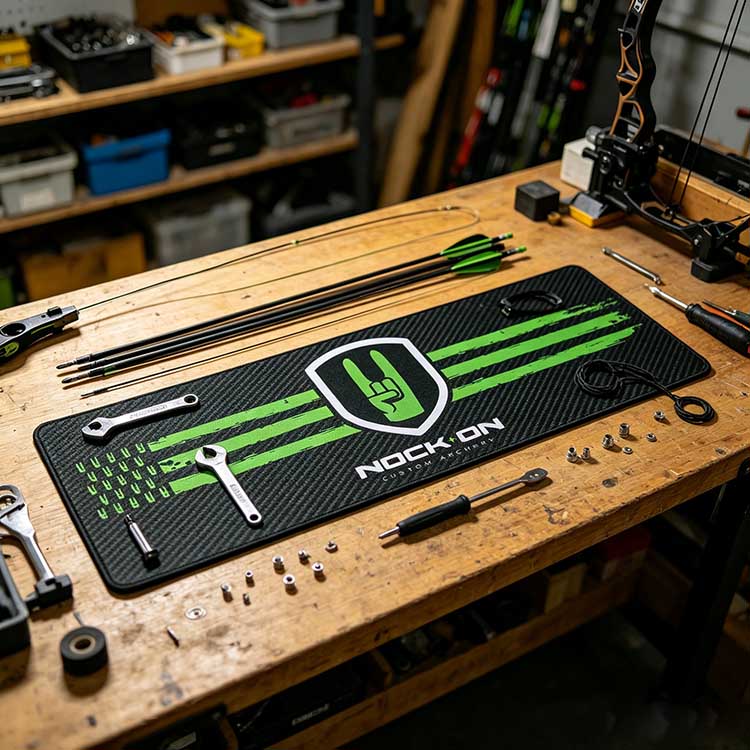
0.25-inch thick rubber base absorbs shock and protects workbench surfaces.
Step 2: Understanding String Changes and Tillering
Upgrading or replacing your string is a routine part of recurve maintenance. However, the process requires absolute stability. You need a flat surface that does not shift or slide under pressure. A specialized archery workbench pad prevents the bow from twisting during the process, protecting the limbs from unnecessary torque. This practice is essential whether you are tuning a professional riser in Manchester, UK, or preparing your first hunting bow in Melbourne, Australia.
Step 3: Caring for Your Wooden Riser and Limbs
Wood is a living material and highly susceptible to moisture changes. After a long day at the range, your bow can absorb moisture from the air or direct sweat from your hands. To protect your riser, always lay your bow flat on the protective mat rather than leaning it against a wall. The open-cell structure of the rubber mat allows air to circulate, protecting the finish from humidity while preventing any dirt or dust from scratching the polished surface.
Step 4: Fletching and Arrow Building
Over time, you will need to refletch your carbon or wood arrows. This is a delicate process that involves using high-temperature glue, which can damage tabletops if not handled correctly. By using a heat-resistant, heavy-duty rubber mat under your fletching jig, you not only protect your table but also create a dedicated, non-slip area to keep tiny nocks and vanes organized.
Final Pro-Tips for the Traditional Archer
Maintaining a recurve bow is an investment in the craftsmanship of archery. By setting up a dedicated, highly organized workspace using a proper Recurve Bow Mat, you ensure that your wooden masterpiece remains flawless. Keep your workspace clean, dry, and safe, and your recurve will serve you faithfully for generations.